Yeah, sorry, you can't do anything with that cellphone video because it's in some stupid format, right? and yeah no your conversion software will convert it... into some special magical mp4 file that can be played by your player but not opened by your video editing software... especially if you're trying to use Ableton Live for video editing. Which you can do. It's great. Shut up. It's awesome. It can only open mp4s and movs if you have QuickTime installed and nobody bothers to document that but whatever, that's OK. It's software. Accountability. It has no meaning.
So anyway, give up on your encoder and just upload the offending video in its crazy format to Google Drive, or YouTube, and then rip it back out of the YouTube player using Firefox Video Download Helper.
Yet another classic instance of having to use software that's legal but in the process of getting shut down for enabling hacking and piracy, in order to do something that's totally legal, but made difficult by companies that want you to pay for your right to edit the videos that you yourself record using the camera in your phone... instead of just sharing it.
So, yeah, the solution is basically to share it, to nobody, then rip it, using software used almost exclusively for piracy, and then you can edit it. Don't be surprised if you can't even see the video clip when surfing your cellphone's hard drive from your PC while it's tethered. Maybe it'll be visible, maybe it'll be invisible. It's software. Literally half a person at Google cares what your experience is like with it. There's somebody around there that's just a pair of legs (no ears so they can't hear your usability problems).
Showing posts with label internet culture. Show all posts
Showing posts with label internet culture. Show all posts
Nov 14, 2013
Why our civilization needs better typography in email and websites
It's no wonder people don't want to do a lot of reading on the web. Of course, LCD screens are bright and exhausting for the eyes to look into, and we'll go down as the generation who lost its eyesight and reading habits to those weird old monitors (the ones we use now, I mean) that couldn't have colour without glowing. We're just starting to see e-readers (and their great screens that you actually have to illuminate with a light or something), gaining popularity, but people still read their emails in their web browsers, on their computers, and we'll keep doing it for awhile.
That's why it'd be nice if Google did something about this:
 That shouldn't be what my emails look like. I used to use Firefox for my emails just because it let me tell it to use fonts that I specify, so I could specify something nice. But that's a browser-wide setting that screws up every website, including gmail.
We need settings inside Gmail that let us say "look, I'm not into Arial as a paragraph font" - hey, it's a sound objection, from a typography theory standpoint.
I just want to sigh, because this comes from a problem that's been on the 'web for far too long: we are using sans-serif fonts for paragraphs because they used to look better on computers. And we're using point sizes that are too small. We as in web designers. Because it's hard to stand up to a creative director who doesn't ever have to read the text that they are making styling decisions about. I get that. But as designers, I feel like we have have an obligation to whip out a typography book here and there and say "look guys, let's think about readability." Not even legibility, but readability.
I don't even know what Hotmail looks like at this point, but if someone wants to link up a screenshot of what their email looks like, comment it up.
That's why it'd be nice if Google did something about this:
We need settings inside Gmail that let us say "look, I'm not into Arial as a paragraph font" - hey, it's a sound objection, from a typography theory standpoint.
I just want to sigh, because this comes from a problem that's been on the 'web for far too long: we are using sans-serif fonts for paragraphs because they used to look better on computers. And we're using point sizes that are too small. We as in web designers. Because it's hard to stand up to a creative director who doesn't ever have to read the text that they are making styling decisions about. I get that. But as designers, I feel like we have have an obligation to whip out a typography book here and there and say "look guys, let's think about readability." Not even legibility, but readability.
I don't even know what Hotmail looks like at this point, but if someone wants to link up a screenshot of what their email looks like, comment it up.


Apr 27, 2013
ShiftEdit IDE: my new cloud-based Dreamweaver replacement?
I have been waiting for a good online HTML/CSS editor for way too long and it turns out I've been missing out because ShifeEdit is ready for our Dreamweaver-ish tasks. I've tried it out a tiny little bit and it hasn't disappointed me in any of the ways that other editors have. It's disappointed me in new and difficult-to-explain ways. But they're not bad.
Overall a great start and I'd certainly use it on a commercial product.
Check out ShiftEdit, the great new browser-based IDE
Overall a great start and I'd certainly use it on a commercial product.
Check out ShiftEdit, the great new browser-based IDE
Apr 26, 2013
Don't remind me about cookies
"Hey, we've gotta let users know that our site uses cookies."
"Uh, we do?"
"Yeah, for sure. Otherwise they won't know."
"Ok so like... maybe we should make them read about it when they first come to our site?"
"Yeah, but it has to be somewhere really visible, like in front of our logo."
"But then we should let people close it once they've seen it."
"Yeah we don't want to make them feel like they have no control."
"Do you think there's anything wrong with it being the first thing people read?"
"Well there's no way to find out how people will react, and we're already spending too much time debating it, so let's just say 'whatever.'"
And the result:

It's like when you're trying to just buy some batteries or something and the cashier wants to know your postal code. After about a decade of issuing warnings like these, web designers mostly gave up on them, assuming that users had gotten the memo and understood what cookies were all about. But users never did get the memo, because it's not important enough of an issue for them to warrant that they learn about the technicalities behind their browser's relationship with the site and with them.
"Uh, we do?"
"Yeah, for sure. Otherwise they won't know."
"Ok so like... maybe we should make them read about it when they first come to our site?"
"Yeah, but it has to be somewhere really visible, like in front of our logo."
"But then we should let people close it once they've seen it."
"Yeah we don't want to make them feel like they have no control."
"Do you think there's anything wrong with it being the first thing people read?"
"Well there's no way to find out how people will react, and we're already spending too much time debating it, so let's just say 'whatever.'"
And the result:
It's like when you're trying to just buy some batteries or something and the cashier wants to know your postal code. After about a decade of issuing warnings like these, web designers mostly gave up on them, assuming that users had gotten the memo and understood what cookies were all about. But users never did get the memo, because it's not important enough of an issue for them to warrant that they learn about the technicalities behind their browser's relationship with the site and with them.
Apr 25, 2013
Facebook tries to re-brand ads
First it labels them "suggested posts":

But after you tag one as spam, it admits the truth:

Dear Facebook staff: Yours is a big company, with lots of expenses. You user base is huge, but agile. We could jump ship over the course of a week. You are steering the ship towards the sinkhole that swallowed Friendster and MySpace. It wasn't how great Facebook was, and it wasn't how bad they were, that made us switch. It was how much better Facebook was. We are chomping at the bit, knowing that all somebody has to do to beat Facebook is offer the same features without the creepiness/trust issues factor.
But after you tag one as spam, it admits the truth:
Dear Facebook staff: Yours is a big company, with lots of expenses. You user base is huge, but agile. We could jump ship over the course of a week. You are steering the ship towards the sinkhole that swallowed Friendster and MySpace. It wasn't how great Facebook was, and it wasn't how bad they were, that made us switch. It was how much better Facebook was. We are chomping at the bit, knowing that all somebody has to do to beat Facebook is offer the same features without the creepiness/trust issues factor.
Apr 21, 2013
Global News joins the @font-face Web Fonts bandwagon
Global News has picked an attractive sans-serif font from typography.com, which loads up seamlessly (unlike Blogger's Google Fonts service) and looks great:
Now that's a beautiful Sans-serif font. And their technique's great. Their site loads way too much Javascript in general, but this part of their design is pretty easy on the browser.


Apr 13, 2013
Make your experience part of the social feedback loop
Today, social media is the glue that binds together the internet's content, especially as it emerges. As a content creator, it's your job to reach out to users in social media. If you can accomplish that, you might be asking, what's next?
Complete the cycle: Get users working for you by making it easy for them to share your content using social media. That way, they can do what they like doing best: investigating something interesting that one of their friends shares with them, adding to whatever conversation is going on about it, and re-distributing it in their own way.
If you can make your content part of the cycle, you'll not only notice that it gets spread around, drawing traffic. It also gets re-contextualized and delivered in ways that delight marketers and their audience.
Complete the cycle: Get users working for you by making it easy for them to share your content using social media. That way, they can do what they like doing best: investigating something interesting that one of their friends shares with them, adding to whatever conversation is going on about it, and re-distributing it in their own way.
If you can make your content part of the cycle, you'll not only notice that it gets spread around, drawing traffic. It also gets re-contextualized and delivered in ways that delight marketers and their audience.
Mar 28, 2013
Google does the right thing about the Blogger Nav Bar
It's a time for rejoicing, not only in less sketchy CSS code needed but also in the reaffirmation of Google's intentions for us: it wants us to use its software, even if others don't know we're using it.
So now, let us bid farewell to all that is old and broken:


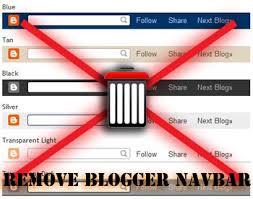

Now, we can chill out and work with this:

So now, let us bid farewell to all that is old and broken:
Now, we can chill out and work with this:
Mar 14, 2012
"Will Be Added Soon..."

Just don't do it. Don't make someone think something's there, then try to open it, and revise their idea of its status. If it's not there, just let it be not there.
This is the backwards way that many people add content to a site:
- Make the section.
- Make the content.
- Add the content to the section.
- Adjust the section to match the content.
- Rewrite the content.
- Write all the content and get the pictures together, and do it on a page that's hidden from public view.
- Publish the page and content.
- Link to the page and content.
Feb 19, 2012
Telling uTorrent to be less generous
uTorrent is a great torrent client (downloading program), but like the other BitTorrent clients out there, it tends to support torrents for way longer than you'd typically like. Here's what happens:
- You install it to download a few torrents.
- Even though you only use it infrequently, it starts with the system and you don't notice it just sitting there.
- You don't remember to "stop" or "remove" your torrents once you notice they've finished downloading.
- You keep using it to download more stuff, but the old torrents are still sitting there.
- Torrents just keep "seeding" (uploading to other people) until you manually tell them not to.
Being willing to seed the torrent for other people after it's finished downloading is part of BitTorrent ediquette. Here's how you can put a limit on that generosity:
- In uTorrent, go to the preferences (in the Options menu)
- Select "Queing" in the list on the left in the preferences box
- Under "seeding goal" add a minimum ratio. I put 150%, which tells uTorrent that it should aim to give one-and-a-half times the amount as it gets.
- Under "when uTorrent reaches its seeding goal," enable the "limit the upload rate..." thing, and put a "0" in the box to the right of it. This says, when you've seeded enough, just stop seeding.
This is a setting that uTorrent should guide you through when it first installs. It's not presented in a way that's easy for users to understand.
Jul 17, 2011
"Sent From my Mobile Device"
Some people need to do a lot of correspondence each day. And they're finding ways of splitting it up, organizing it, and deferring it, all so that they can process as much as possible.
Businesspeople are especially familiar with the challenges of maintaining focus on the task at hand while also responding to all kinds of communication, and keeping track of time.
Through history we've seen a lot of solutions to this: administrative assistants and customer service clerks are the classic examples.
In today's productivity environments, e-mail and instant messages are replacing a huge chunk of phone calls, allowing everyone to do more communicating - and more effective communicating.
E-mail is also providing a convenient bridge between cellphones and computers, through the internet.
How fast can this trend grow? As fast as people can learn to use their cellphones to send e-mails and facebook messages.
Businesspeople are especially familiar with the challenges of maintaining focus on the task at hand while also responding to all kinds of communication, and keeping track of time.
Through history we've seen a lot of solutions to this: administrative assistants and customer service clerks are the classic examples.
In today's productivity environments, e-mail and instant messages are replacing a huge chunk of phone calls, allowing everyone to do more communicating - and more effective communicating.
E-mail is also providing a convenient bridge between cellphones and computers, through the internet.
How fast can this trend grow? As fast as people can learn to use their cellphones to send e-mails and facebook messages.
Jun 22, 2011
Wow! Firefox inspector hits and misses
I don't like FireBug. You know, the 3rd party utility that gives Firefox a DOM inspector that's somewhere between how bad IE 8's is, and how great the Chrome one is. It will let you edit CSS and HTML live, in the browser, and let you copy your changes so you can paste them back into your code. But it's like it doesn't really want to do those things for you. Chrome's inspector really does want you to do it. Taking my fiddling around into the inspector has cut my development time quite a bit, so I'm totally going to use whichever inspector makes it easiest.
I mean, thank goodness it's there so I can debug stuff in Firefox, but thank goodness Chrome's is better, so I don't have to do my CSS design with it. Whew.
This Firefox DOM inspector is even worse than FireBug, though. Try to select that CSS? No, don't try. Don't bother. Just use it to see why it looks like shit in Firefox, try your thing out, and then copy and paste the value. Don't try to copy and paste the whole declaration. Don't try to bring the value with it. Just write "font-size: ;" then hit the arrow-key back to the left of that semicolon, paste your thing, and thank your lucky stars you don't have to use Firebug every single time you're curious about some CSS.
I mean, thank goodness it's there so I can debug stuff in Firefox, but thank goodness Chrome's is better, so I don't have to do my CSS design with it. Whew.
This Firefox DOM inspector is even worse than FireBug, though. Try to select that CSS? No, don't try. Don't bother. Just use it to see why it looks like shit in Firefox, try your thing out, and then copy and paste the value. Don't try to copy and paste the whole declaration. Don't try to bring the value with it. Just write "font-size: ;" then hit the arrow-key back to the left of that semicolon, paste your thing, and thank your lucky stars you don't have to use Firebug every single time you're curious about some CSS.
May 27, 2011
Music Recommendations based on band members
Allmusic is a great website. Because it shows you who's in what bands. And you can see what other bands they were in. Same with the producers, labels and other stuff. So what about providing music recommendations based on questions like:
"What is it about this song, which you already like, that makes it so great?"
It's the songwriting.
"OK so the guy in the band who wrote a bunch of songs for this other band. And one of their albums was put out by the same record label as the album that your original favourite song came out on."
Oh wow, this album is amazing!
Or it could generate some interesting mismatches.
This is a process I've been meaning to do manually. But it would be so nice to have like a "music cloud" of recommendations that mapped the connections between the people who contributed the things that make your favourite music special to you.
"What is it about this song, which you already like, that makes it so great?"
It's the songwriting.
"OK so the guy in the band who wrote a bunch of songs for this other band. And one of their albums was put out by the same record label as the album that your original favourite song came out on."
Oh wow, this album is amazing!
Or it could generate some interesting mismatches.
This is a process I've been meaning to do manually. But it would be so nice to have like a "music cloud" of recommendations that mapped the connections between the people who contributed the things that make your favourite music special to you.
May 9, 2011
The Institution of Me: Selling Yourself vs. Adding Value
I do not know how to begin this article, because it's about a phenomenon that I can't pin down. It's about employment, youth, and the current economic climate.
A few things are adding up these days:
- Being an employee isn't so great anymore. It no longer gives you job security, a role in the decision-making, or a share of the company's identity. That means that people are navigating a course through one role after another, for one company after another.
- Our marketable skill base continues to diversify. People can't tell how focused they should be with their skill-building, and are aiming for the sweet spot between being the best at a trade that may disappear at any moment, or being a "jack-of-all-trades, expert at none." Of course I believe that one's implementation of their set of skills and talents forms their proficiency.
- The focus of prescribed youth culture has alighted upon discovery of and promotion of one's personality and skillset. From what I can see, it's been a collective effort of our societal focus on individuality and personal growth, as well as the dominating effect of hip hop culture which encourages youth to be their own biggest advocate, unabashedly singing their own praises and beating their own drums.
- All this focus on individuality is a bandwagon in itself, and the culture and language of self-promotion has spread and standardized itself. It's become the collective mantra of the next generation. I think that, paradoxically, it hampers creative individual discovery.
I'd like to come to my point now: I'm concerned that personal development can easily get overshadowed by self-promotion. When somebody can say "I've been working on this and have learned how to do that," it expresses something that is real, and that is beyond speculation. It's not bragging and it's not formulated specifically to influence other people's perception of a personal brand.
Really, we're all just people with unique combinations of activities and interests. If I develop an approach to some field of work, then that approach itself can be seen as a brand. If I use it to deal with several different services or products, each of those could be branded and promoted on its own, but what's the point in setting oneself up with more branding responsibilities than is necessary? If, on the other hand, I decide that I myself am the brand, and everything I do falls under one umbrella, that's another impossible branding challenge, because a personality just isn't tangible enough, and slapping a unifying label on everything I do would change the way I think of myself and develop. That just creates other problems.
So what I'm proposing is a middle-path solution to branding and self-promotion:
- The pursuit of one's own interests and curiosity adds value to a uniquely diverse skill-set, whereas the construction of a prescribed, generic skill-set tends to limit one's opportunities.
- It's easier for a person to talk about the things they're actually doing or curious about doing than to discuss their own qualities and proficiencies. It also makes it easier for others to set them up with opportunities.
- It just looks better from the outside to see someone working hard on the things that excite them, than it does when they're working hard to get others to get others excited.
- It's better to be known as an accomplished and active person than as a driven and ambitious one.
- It's often easier for someone to excel at doing something in their own way, and to deal with the challenges of communicating that unique approach, than it is to make a generic and common approach work for them. It's also easier to find one's niches, and it seems like niches are where all the value is.
I certainly know both kinds of people.
I have a friend who's doing tremendously well with developing her career in production. She's not afraid to switch gears and learn new things even if it puts her back into the position of being a novice, because she knows that new skills add value to old ones. She never runs out of interesting things to talk about because she's always focused on doing rather than saying. She gets discouraged by setbacks but doesn't stop doing what she's doing, because to her it's not all about "me: the brand," it's about "the work I'm doing."
And I have a friend who's always talking about what he's going to be doing, asking people around him to recommend him to other people, and talking about the future. About the company he's building, about how he deals with people, about all the obstacles and people trying to keep him from achieving his goals. Meanwhile, not a lot of work is getting done on his actual materials. Hours are wasted on the phone, and months go by without any actual development being done. He's stuck, and because he's being told by people on all sides that he's got to "sell" himself, and because that's all he's ever been told, he feels really isolated and just digs himself in deeper, ramping up his self-promotion efforts instead of developing what he's offering for sale.
I've always felt like, in terms of my music career, I'd prefer to have a few really serious fans, who absolutely love my music and will love it forever, than a ton of fans who are just kind of into it. And it's the same with anything else.
Here are some rules of thumb that relate to this:
- Quality over quantity
- Show me (don't tell me)
- It doesn't have to be perfect (just better)
- Don't stop doing what you're doing ('cause you're doing it right)
Sep 22, 2010
Anatomy of a "Web-Assisted Sale"
A sales inquiry can come through a chain of events, starting with a search, a link, or a referral, and doesn't necessarily involve a custom website
Here's how internet traffic can be funneled into a phone call that will actually get you some cash:
So here's a typical web-assisted sale:
- A "wanna turn into a" buyer is trying to solve a problem of theirs: they need and do not have something that you happen to have for sale (and just to brag, if you're among my clients, you're fortunately their best choice). So that's about whether or not they find you while on the hunt for something that you can get them. If, on the other hand, they're interested in you specifically, curious about what you offer, then a tiny, miniscule amount of work on your part can make you easily findable, which solves their problem, and then yours.
- Whether they're searching for "lawn care in Toronto" or "A&B Landscapers," the search results will vary according to how online you are. The results might include your website, or it may turn up 3rd-party public listings sites, blogs, discussion sites and social referrals from their online friends. If you've been skillful or lucky, then your official page will be at the top of the results, followed by the other sites I mentioned. If "you" are already well-documented, then most of the work towards that goal is already done.
- Your website or profile can help potential patrons decide what they're interested in, the specific enquiries that can help them to make a decision. It can also help them decide specifically which of your people to contact. It can even help them decide on their timing. This is how you can optimize your sales and customer service hours so much, you'll be able to give your front desk people additional responsibilities.
- Your staff can devote their time to answering questions that are specific to each case, and use the internet to present information to the customer.
- A continuous and relaxed web strategy should pay for itself
- Increased sales, increased satisfaction and decreased presentation costs should recoup costs associated with an internet presence
- If web work is done incrementally, costs can be recouped continuously and a sensible budget can be maintained
Mar 15, 2010
What webhosting and old car ads have in common
It's disgusting, really. Apparently when we're looking for web hosting solutions, we have our penises on and want to look at pictures of sexy ladies staring at us.
Subscribe to:
Posts (Atom)